
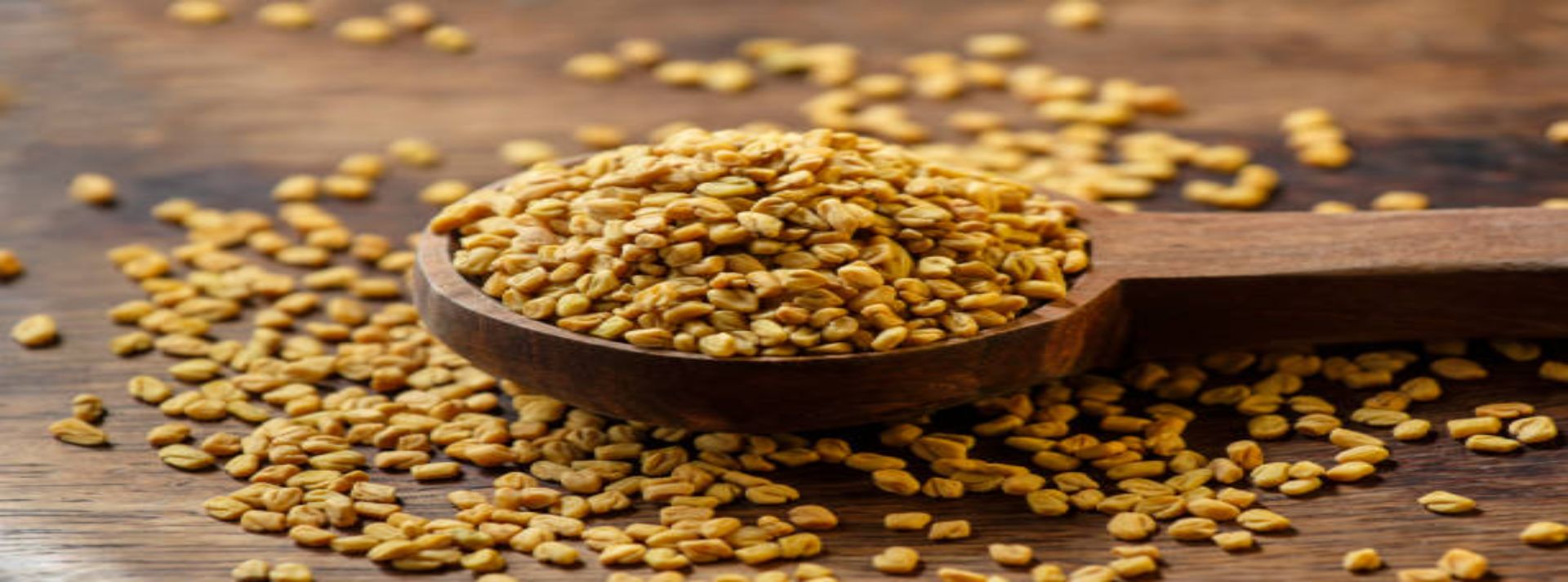
Fenugreek, also known as methi in Hindi, is an annual plant in the family Fabaceae. It is cultivated worldwide as a semiarid crop and its seeds and leaves are common ingredients in dishes from the Indian subcontinent1. Fenugreek is believed to have been brought into cultivation in the Near East and charred fenugreek seeds have been recovered from Tell Halal, Iraq (carbon dated to 4000 BC) and Bronze Age levels of Lachish, as well as desiccated seeds from the tomb of Tutankhamen1.
India is a major producer of fenugreek, with over 80% of India’s output coming from Rajasthan1. Fenugreek is used as a herb (dried or fresh leaves), spice (seeds), and vegetable (fresh leaves, sprouts, and microgreens). Sotolon is the chemical responsible for the distinctive maple syrup smell of fenugreek1. Fenugreek seeds are frequently encountered in the cuisines of the Indian subcontinent, used both whole and powdered in the preparation of pickles, vegetable dishes, dal, and spice mixes such as panch phoron and sambar powder. They are often roasted to reduce inherent bitterness and to enhance flavor1.
In conclusion, while fenugreek may not have originated from India, it has become an integral part of Indian cuisine. Today, India is one of the largest producers of fenugreek in the world. Fenugreek is used as a herb, spice, and vegetable in Indian cuisine and its seeds are frequently used in the preparation of pickles, vegetable dishes, dal, and spice mixes.