
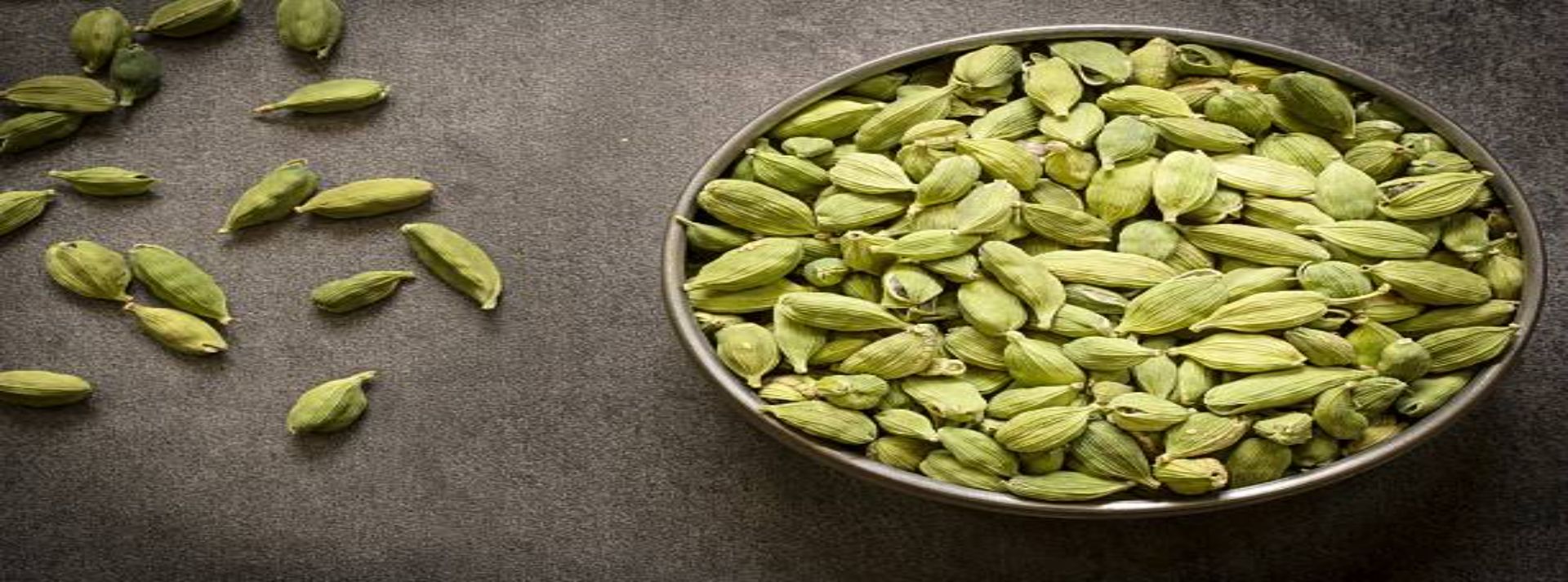
Green cardamom, also known as true cardamom, is a herbaceous, perennial plant in the ginger family, native to southern India. It is the most common of the species whose seeds are used as a spice called cardamom that has a sharp, strong, punchy aroma1. The use of this spice dates back to at least 4000 years.
Originally, cardamom grew wildly along the Western Ghats in South India. This region even to this day is known as Cardamom Hills. In India, the states of Sikkim and Kerala are the main producers of cardamom; they rank highest both in cultivated area and in production.
The planting of cardamom should be well planned. Shady trees like balangi, cedar and elangi should be grown first, as these form a canopy under which the cardamom plants grow. Cultivation is done through seeds or propagation by vegetative means through suckers. The latter is the most preferred method. Long, trailing leafy stalks grow from the base of the plant, and they are the bearers of the fruit. The cardamom flower is green in colour with a white purple veined tip. The fruit is known as a “capsule” and these are harvested only when they ripen2.
Cardamom plants are “high maintenance”. Regular weeding, frequent watering during the hot summer months, ensuring sufficient light during the monsoons, ample shade during the summers and organic moisturising are round the year activities that take place on a cardamom plantation. Apart from this, fertilisers are used to keep pests away from the fruit. The plants start bearing fruit in the 2nd or 3rd year of plantation. They are harvested when the fruits reach the ripened stage. This is one fruit which to-date is harvested by hand. This is the primary reason why it is so expensive.
Once harvested, these capsules are then sun-dried or machine-dried depending on the weather conditions. Cardamom is graded on the basis of size and colour. In order to retain their green colour, once dry, they are packed in black polythene bags.
In conclusion, green cardamom is native to southern India and has been used for at least 4000 years. Today, India remains one of the largest producers of green cardamom in the world.