
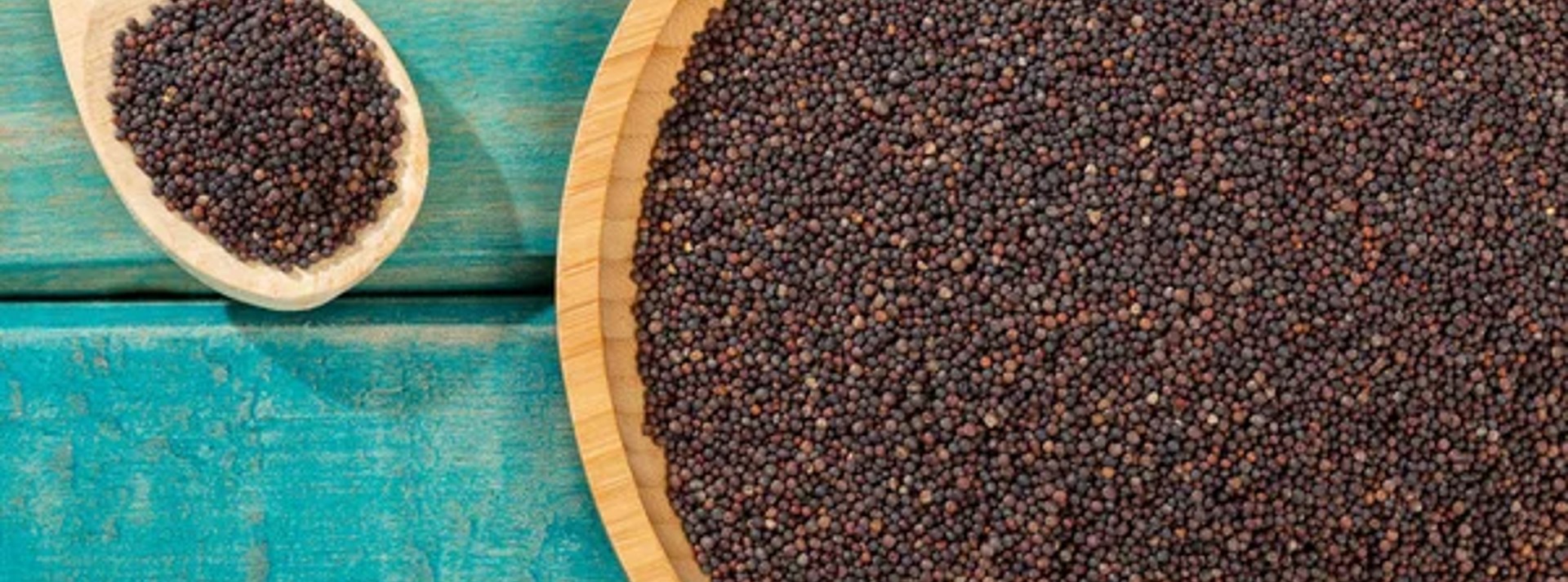
Mustard seeds are the small round seeds of various mustard plants. The seeds are usually about 1 to 2 millimetres in diameter and may be colored from yellowish white to black. They are an important spice in many regional foods and may come from one of three different plants: black mustard (Brassica nigra), brown mustard (B. juncea), or white mustard (Sinapis alba).
The initial reference to mustard seeds in India is from a story of Gautama Buddha in the 5th century BCE. Gautama Buddha told the story of the grieving mother (Kisa Gotami) and the mustard seed2. Mustard seeds have been used as a spice in South Asia for centuries. The seeds are usually fried until they pop. The leaves are also stir-fried and eaten as a vegetable. Mustard oil is used for body massage during extreme winters, as it is thought to keep the body warm. In South Asian cuisine, mustard oil or shorsher tel is the predominant cooking medium. Mustard seeds are also essential ingredients in spicy fish dishes like jhaal and paturi.
India is a major producer of mustard, with over 80% of India’s output coming from Rajasthan3. Mustard farming has been carried out in Rajasthan since ancient times, and it is also popular in Madhya Pradesh and Gujarat. Some southern area farmers have also grown mustard crops in India, including Karnataka, Tamil Nadu, and Andhra Pradesh. The Rabi crop in Assam, Bihar, Orissa, and West Bengal mentions it as a yellow season.
In conclusion, while mustard seeds may not have originated from India, they have become an integral part of Indian cuisine and culture. Today, India remains one of the largest producers of mustard seeds in the world.