
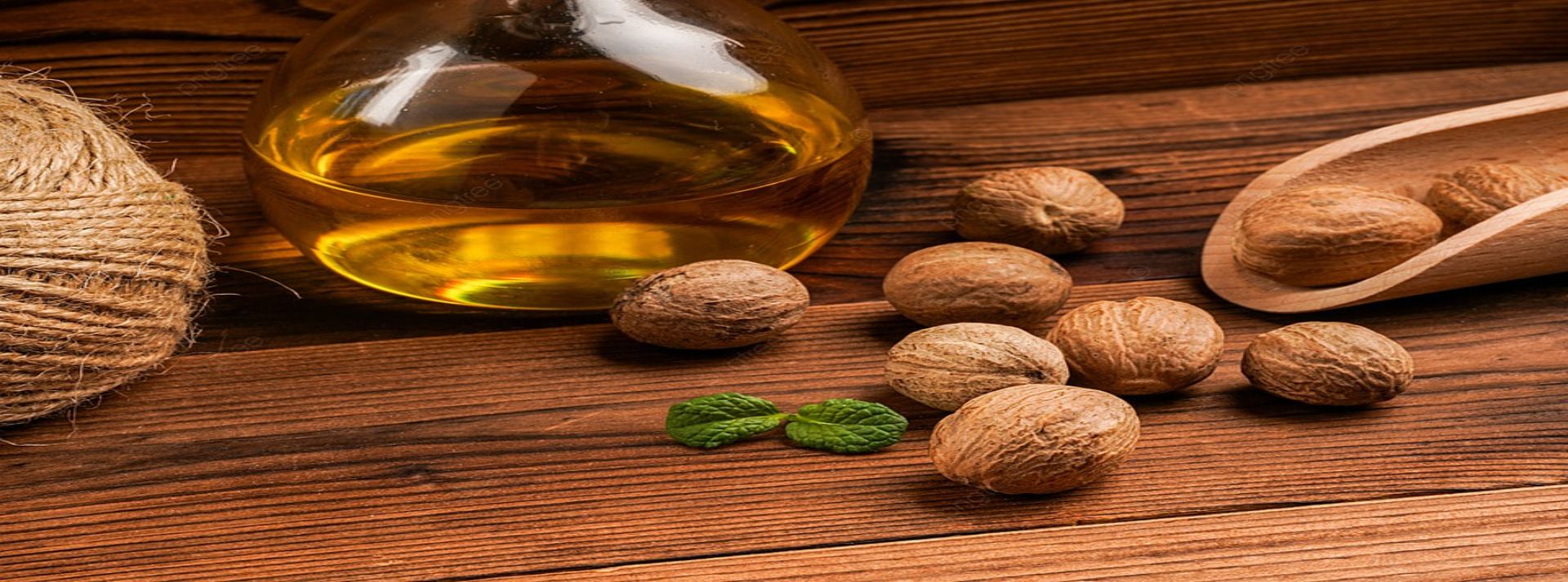
Nutmeg is a spice that was once hailed the world over as “worth its weight in gold”. The nutmeg tree owes its origin to Banda, the largest of the Molucca spice islands of Indonesia. However, the word “nutmeg” comes from the Latin nux, meaning nut, and muscat, meaning musky. Nutmeg was introduced to India towards the end of the 18th century and is now grown in certain pockets of Kerala, Tamil Nadu, and Karnataka.
Nutmeg trees are usually propagated through seeds. First, the seeds are sprouted into saplings in a tray. Once the saplings start to grow, they are then transplanted to pits. The monsoons are the most ideal planting season. It’s during the summer months that they need a little shade and proper irrigation, especially during their early years. Normally, fast-growing shade plants like banana, Erythrina, etc. are grown a few months prior to the nutmeg planting season. Trees that grow from seedlings start yielding in 7 to 8 years. They reach their full bearing stage after 15 to 20 years. Nutmeg trees have a phenomenal life span, close to 60 years! The beauty of these trees is that they flower throughout the year.
The fruit that it produces resembles a peach in shape and is known as the “nutmeg apple”. Most often, the fruit is discarded and the seed (nut) is retained. Once it is dried, we get both the nutmeg and the mace.
The essential oil from the spice is obtained by steam distillation of ground nutmeg and is used extensively by perfumeries and pharmaceuticals. It helps in treating diarrhea, nausea, stomach spasms and pain, and intestinal gas. It is also used for treating cancer, rheumatism, kidney disease, and insomnia. This oil is used to relieve muscular aches and pains too. Both nutmeg and mace are used both in sweet and savory dishes.